Abu Simbel
Abu Simbel is the pair of rock-cut temples of Ramses II, carved into the cliffs far south of Aswan. In the 1960s the temples were relocated to higher ground in an international rescue effort.
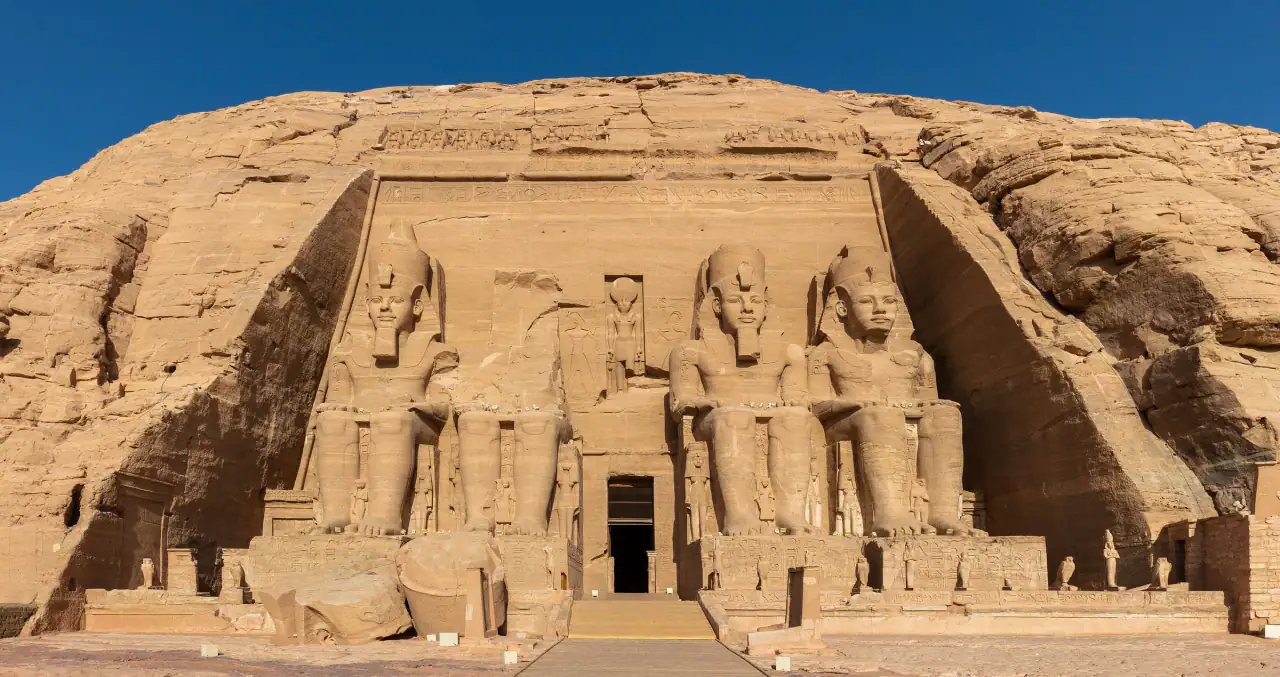
Four colossi of Ramses II
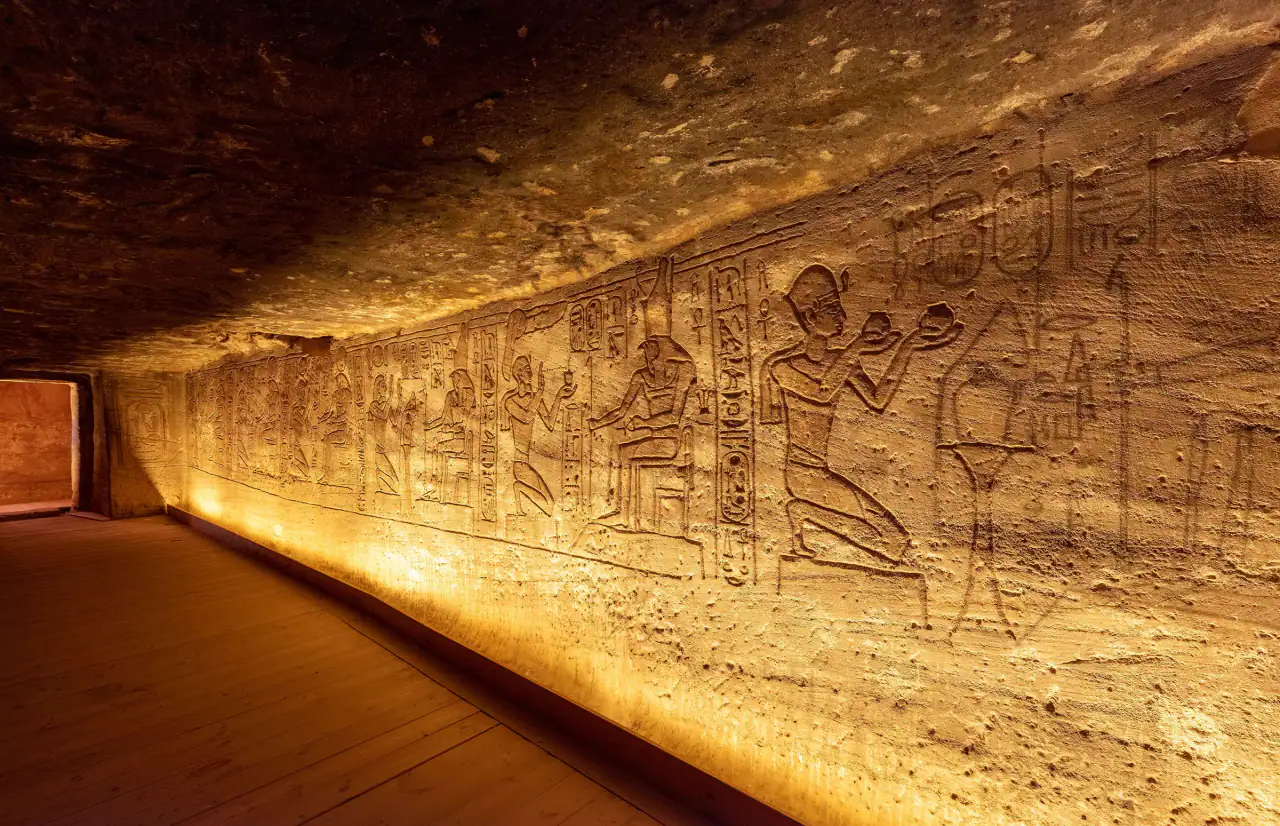
The façade of the Great Temple is dominated by four seated statues of Ramses II, each about 20 meters tall. Inside, the temple runs deep into the rock, past a pillared hall with reliefs of the king’s wars, including the Battle of Kadesh. The smaller temple beside it was dedicated to the goddess Hathor and to Nefertari, the king’s great royal wife.
Moved block by block
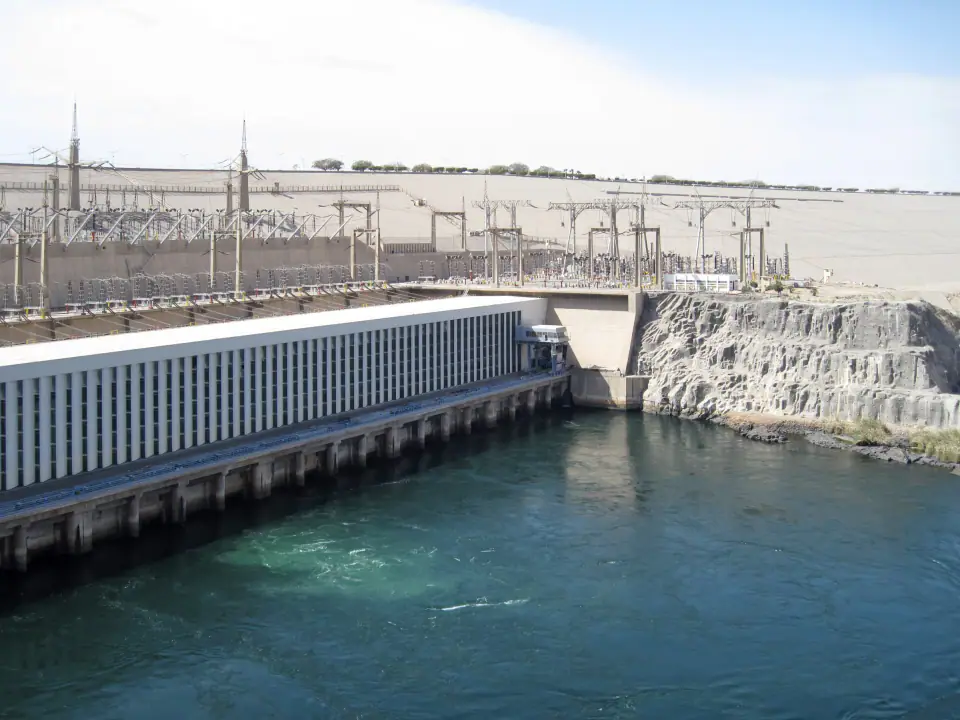
When the High Dam was built, the rising water of Lake Nasser threatened to drown both temples. Between 1964 and 1968, an international campaign led by UNESCO cut them into large blocks and rebuilt them on higher ground above the old site. The monuments are part of a UNESCO World Heritage site.
Ramses II carved his name into a mountain, and in the twentieth century the world moved the mountain to keep it.
The sun in the sanctuary
The Great Temple is aligned so that twice a year the rising sun reaches the innermost sanctuary and lights the statues of the gods seated there. Ptah, a god linked with the underworld, is said to stay in shadow.
- Built by
- Ramses II
- Temples
- Two
- Façade statues
- About 20 m
- Relocated
- 1964–1968
Visit on these journeys
Offered as an optional excursion: on day 4 from Luxor, on day 2 from Aswan.