Karnak Temple
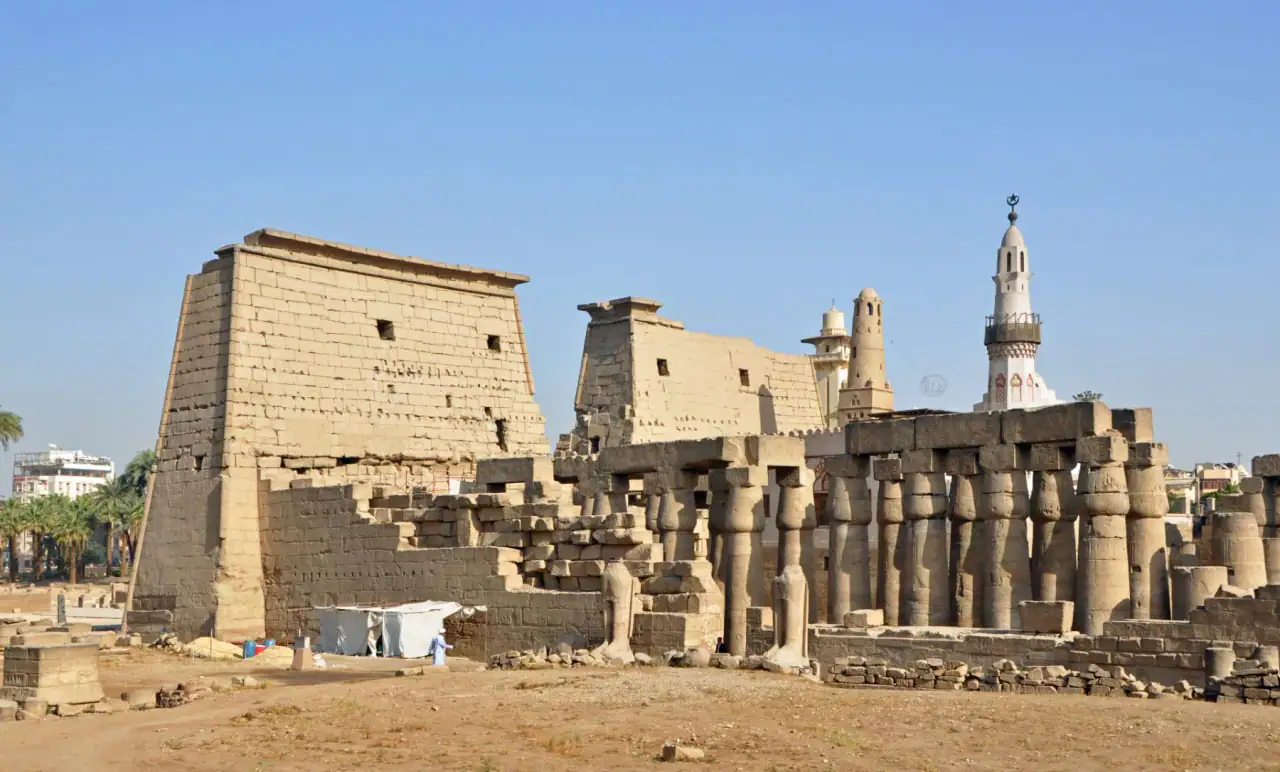
The Karnak Temple is one of the most extraordinary and vast religious sites in the world. Located on the east bank of the Nile River in Luxor (ancient Thebes), Karnak is a monumental testament to ancient Egyptian religion, culture, and architecture.
Built over two millennia
The complex served as the main place of worship for the Theban triad of gods: Amun-Ra, Mut, and Khonsu. Construction began around 2000 BCE during the Middle Kingdom, but the site reached its peak during the New Kingdom (1570–1070 BCE). Each successive pharaoh added to the temple, creating a vast complex of sanctuaries, pylons, obelisks, and statues.
The Avenue of Sphinxes and the Great Hypostyle Hall
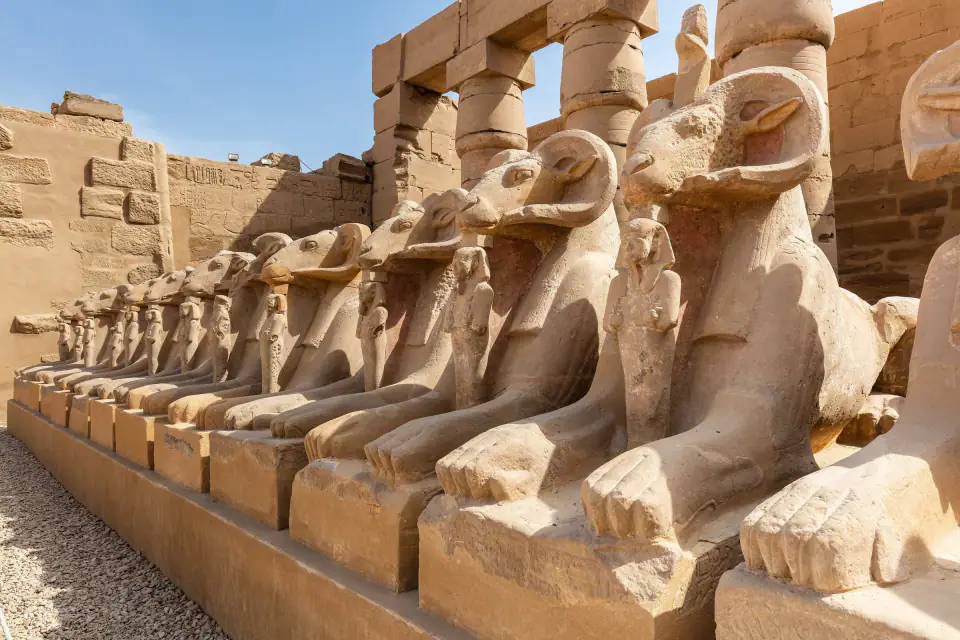
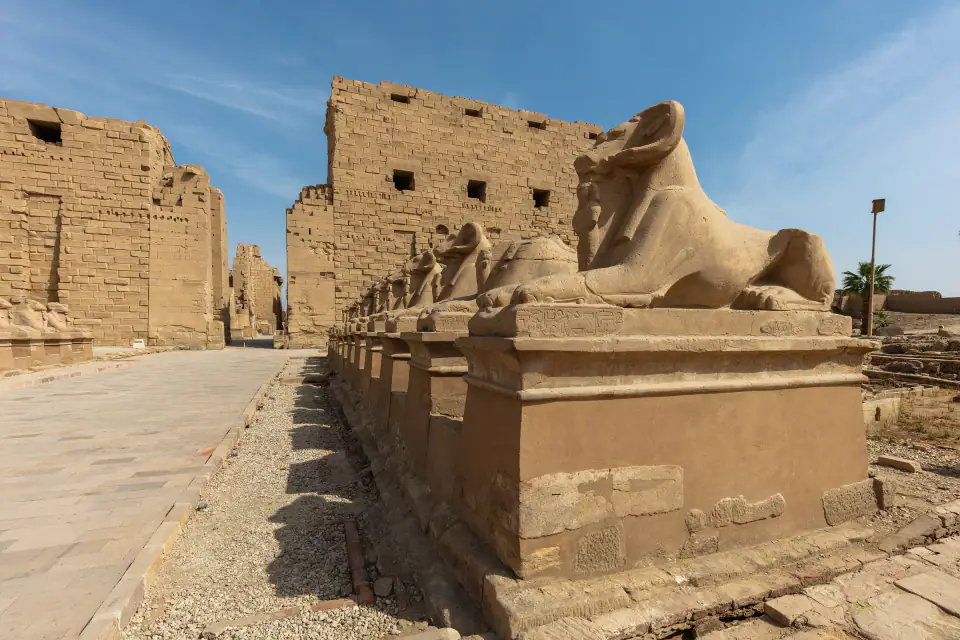
The entrance to Karnak is marked by the grand Avenue of Sphinxes, which once connected Karnak to the Luxor Temple. These sphinxes have ram heads, symbolizing the god Amun. One of the most iconic features of Karnak is the Great Hypostyle Hall, covering 54,000 square feet with 134 massive columns arranged in 16 rows.
Karnak was not just a temple; it was a central hub for religious, economic, and political activities in ancient Egypt.
The Opet Festival
The Opet Festival, an important annual religious event, involved processions between Karnak and the Luxor Temple, celebrating the renewal of kingship and the divine union of Amun-Ra with the pharaoh.
- Hypostyle Hall
- 134 columns
- Central columns
- 69 feet
- Hatshepsut’s obelisk
- 97 feet
- Center of religious life
- 2,000+ years
Visit on these journeys
Offered as an optional excursion on day 1.