Luxor Temple
Luxor Temple, located on the east bank of the Nile River in Luxor (ancient Thebes), is one of Egypt’s most important and well-preserved ancient temples. It is closely associated with the pharaohs and the divine kingship of Egypt.
From Amenhotep III to Alexander the Great
Luxor Temple was originally built during the 18th Dynasty of the New Kingdom by Amenhotep III. It was later expanded and modified by subsequent rulers, including Ramses II and Alexander the Great. The temple was dedicated primarily to the Theban triad of gods: Amun-Ra, his consort Mut, and their son Khonsu.
The pylon of Ramses II
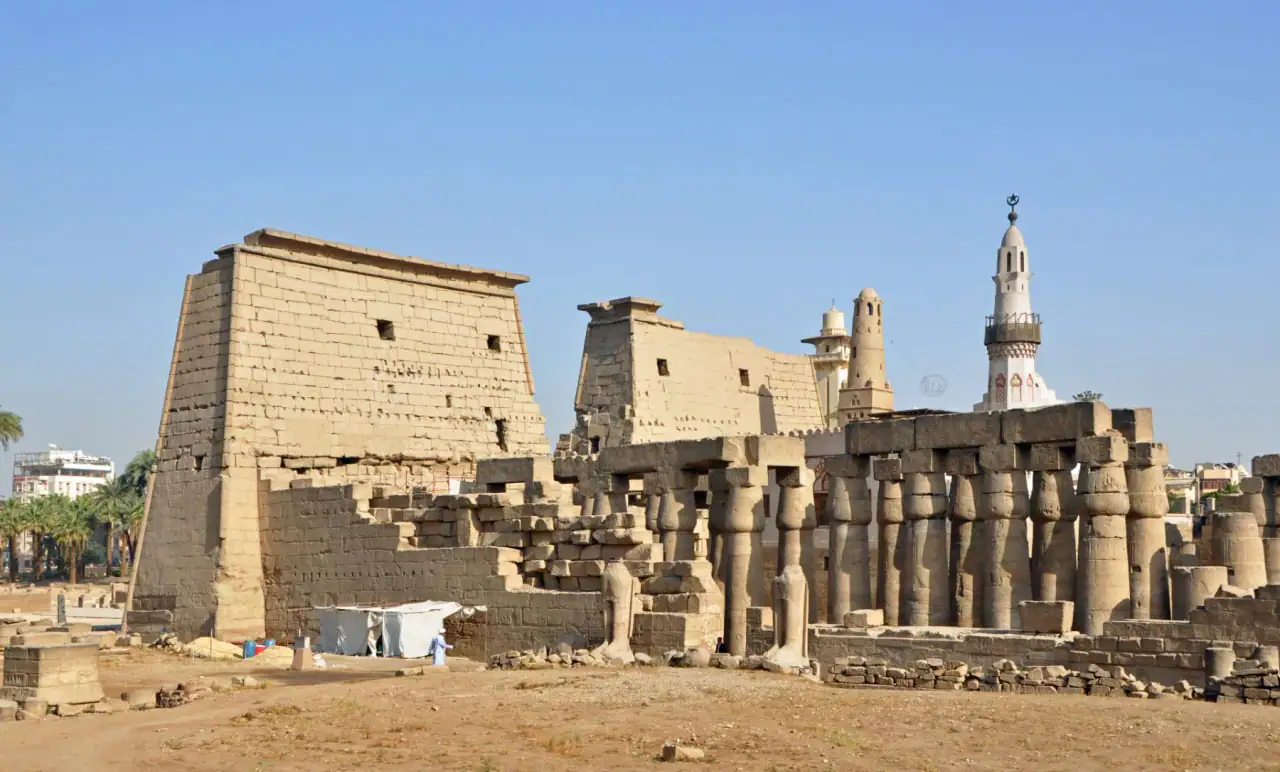
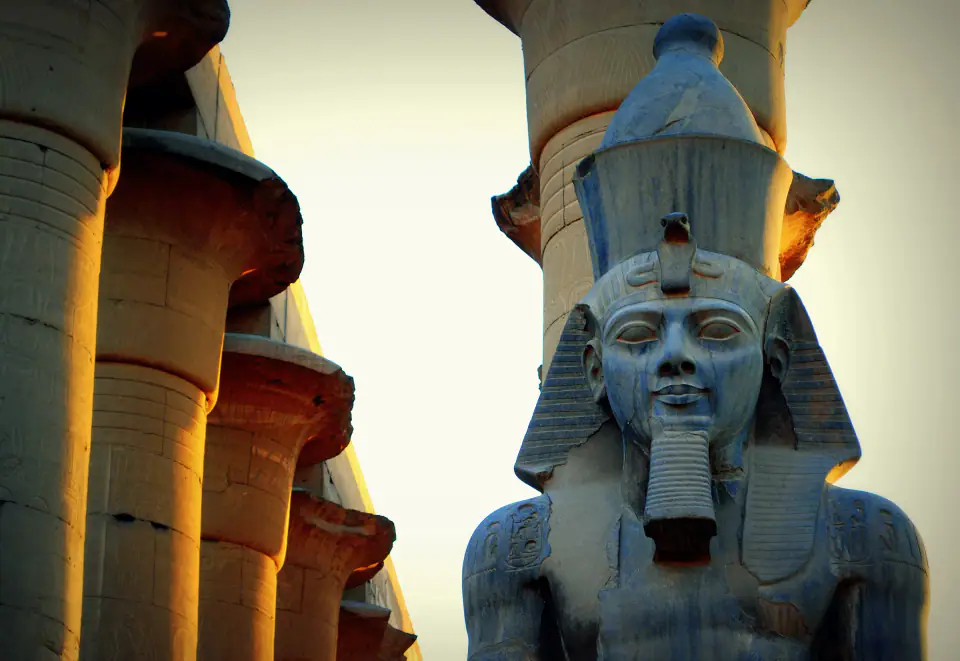
The temple is entered through a massive pylon built by Ramses II, adorned with reliefs depicting the pharaoh’s military victories and his divine status. One of the two obelisks he raised still stands before it, while its partner has stood on the Place de la Concorde in Paris since the 1830s. Colossal statues of the king flank the gateway, and the pylon leads to a grand courtyard.
Once a year, Amun left Karnak and traveled to this temple to renew the power of the king.
The Opet Festival and the Avenue of Sphinxes
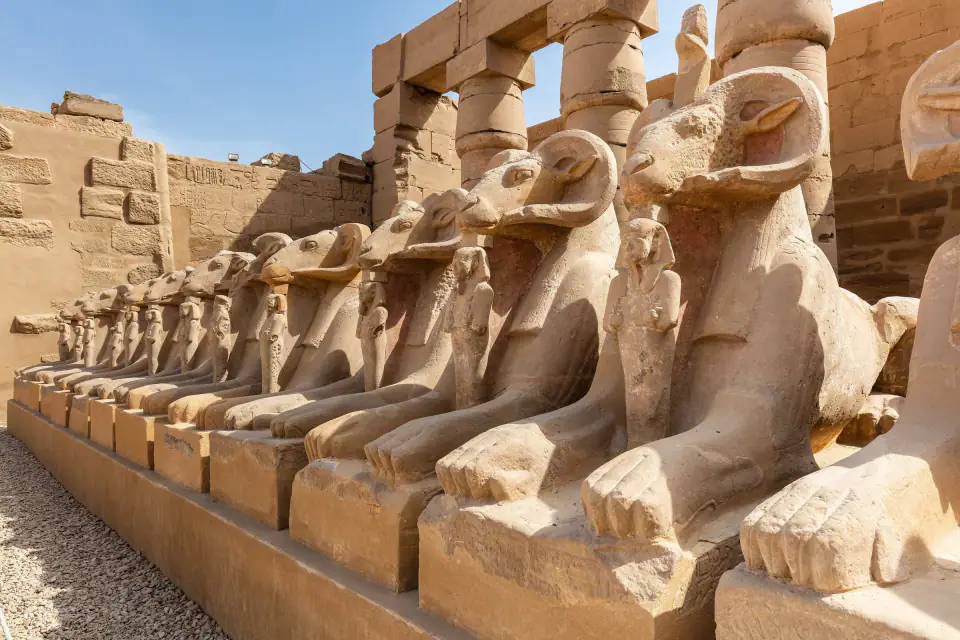
Luxor Temple was the site of the Opet Festival, which celebrated the annual renewal of kingship and the divine union between Amun-Ra and the reigning pharaoh. The temple’s alignment with Karnak, connected by the Avenue of Sphinxes, highlights its importance in religious ceremonies and processions. Later centuries left their own marks: a Roman military camp grew up around the temple, and the Mosque of Abu el-Haggag still stands within its walls.
- Built by
- Amenhotep III
- Enlarged by
- Ramses II
- Dedicated to
- Theban triad
- Festival
- Opet
Visit on these journeys
Offered as an optional excursion on day 1, together with Karnak Temple.