Valley of the Kings
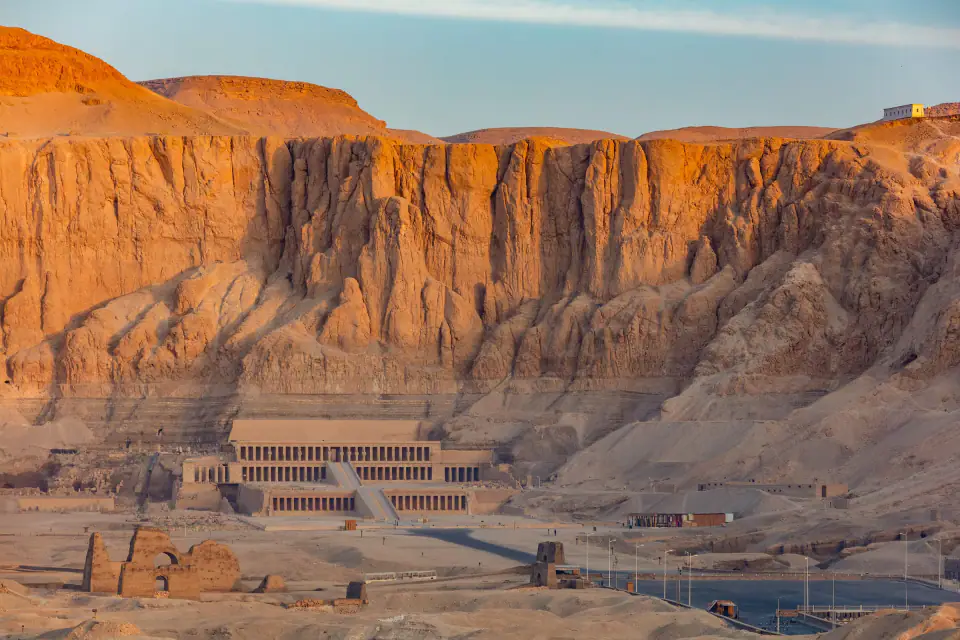
The Valley of the Kings, located on the west bank of the Nile near Luxor, is one of the most famous archaeological sites in the world. It served as the burial place for the pharaohs and powerful nobles of the New Kingdom (c. 1550–1070 BCE), including Tutankhamun, Ramses II, and Seti I.
A hidden royal cemetery in the Theban hills
The valley was chosen as a royal burial site to protect the tombs from grave robbers, a common problem in ancient Egypt. Its remote, arid location in the Theban hills offered a hidden and secure resting place for the pharaohs and their treasures. More than 60 tombs and chambers are known, though not all belong to kings: some are the resting places of queens, high priests, and other nobles.
Tutankhamun, Ramses VI and Seti I
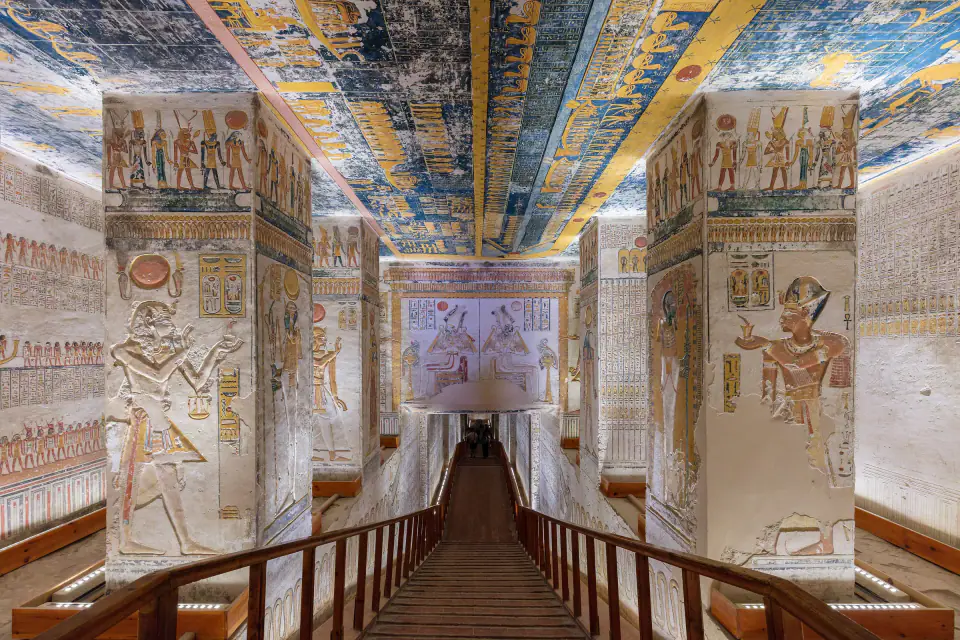
The tombs were carved deep into the limestone cliffs and richly decorated with paintings and hieroglyphics depicting the afterlife, religious texts, and the journey through the underworld. The tomb of Tutankhamun, discovered by Howard Carter in 1922, is the most famous due to its relatively intact state and its treasures, including the golden death mask. Ramses VI (KV9) is known for its extensive, well-preserved wall reliefs, and Seti I (KV17) is one of the longest and most elaborately decorated tombs in the valley.
Here the kings of the New Kingdom traded the pyramid for the silence of a desert valley.
A passage to eternal life
The valley was a place of profound religious significance. The tombs were designed to ensure the king’s safe passage to the afterlife and his eternal life as a god, a belief that emphasized the pharaoh’s divine role and continued influence over the living.
- Period
- New Kingdom
- Known tombs
- More than 60
- Found in 1922
- Tutankhamun
- Location
- West Bank
Visit on these journeys
Offered as an optional excursion on day 2, as part of the West Bank visit.