Deir el-Medina
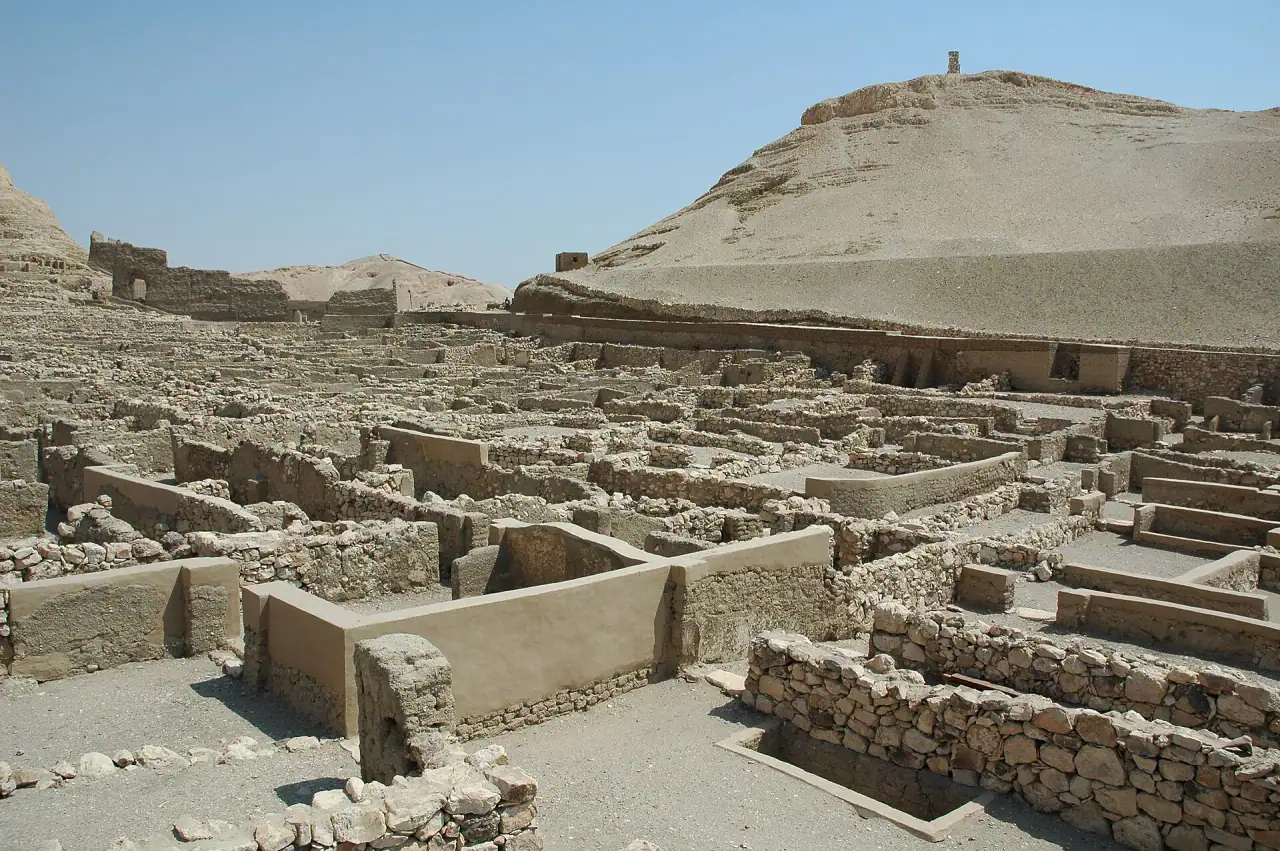
Deir el-Medina is the village of the artisans who carved and painted the royal tombs of the New Kingdom. The remains of their homes are still laid out on the hillside on the West Bank at Luxor.
The workers’ village of the Theban Necropolis
The community lived here for much of the New Kingdom, from the 18th to the 20th Dynasty. Stonecutters, plasterers, draftsmen and painters lived with their families in a walled village and walked over the hills to their work in the Valley of the Kings. The ancient name of the village was Set Maat, the Place of Truth.
Everyday life on limestone flakes
Few places reveal the lives of ordinary ancient Egyptians so clearly. Thousands of ostraca, flakes of limestone and pottery used for writing, record wages, letters, disputes and accounts. The written records of the village also include one of the earliest documented strikes in history, when workers under Ramses III stopped work over late rations.
The men who painted eternity for the kings came home to a street of small houses.
Painted tombs and the temple of Hathor
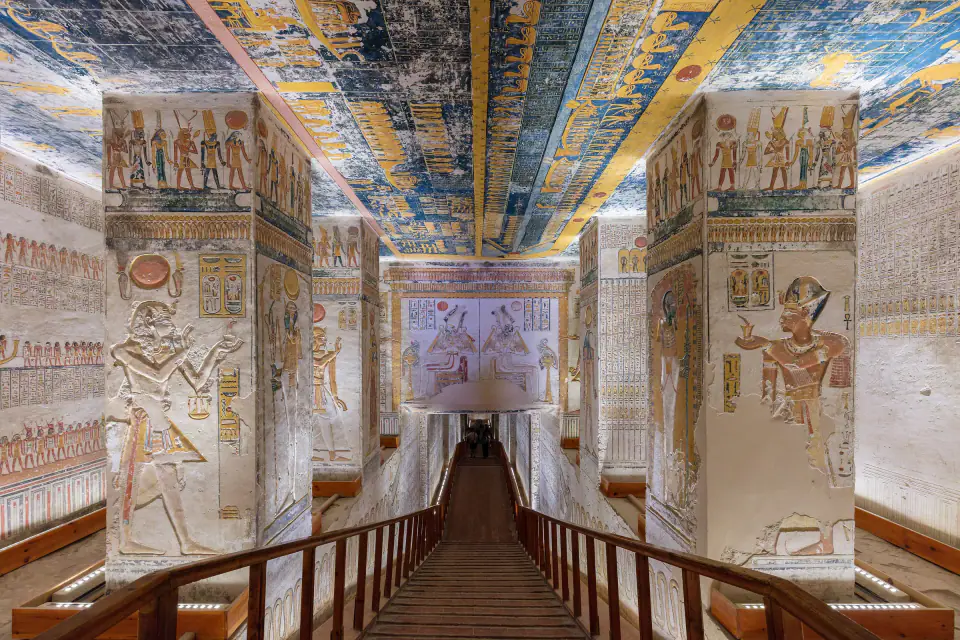
The artisans cut small tombs for themselves on the slope above the village and decorated them with great skill, as in the tomb of Sennedjem. Nearby stands a Ptolemaic temple of Hathor, later used by Christian monks. This gave the site its Arabic name, the Monastery of the Town.
- Ancient name
- Set Maat
- Period
- New Kingdom
- Home of
- Tomb builders
- Temple
- Hathor
Visit on these journeys
Offered as an optional excursion on day 2, as part of the West Bank visit.