Colossi of Memnon
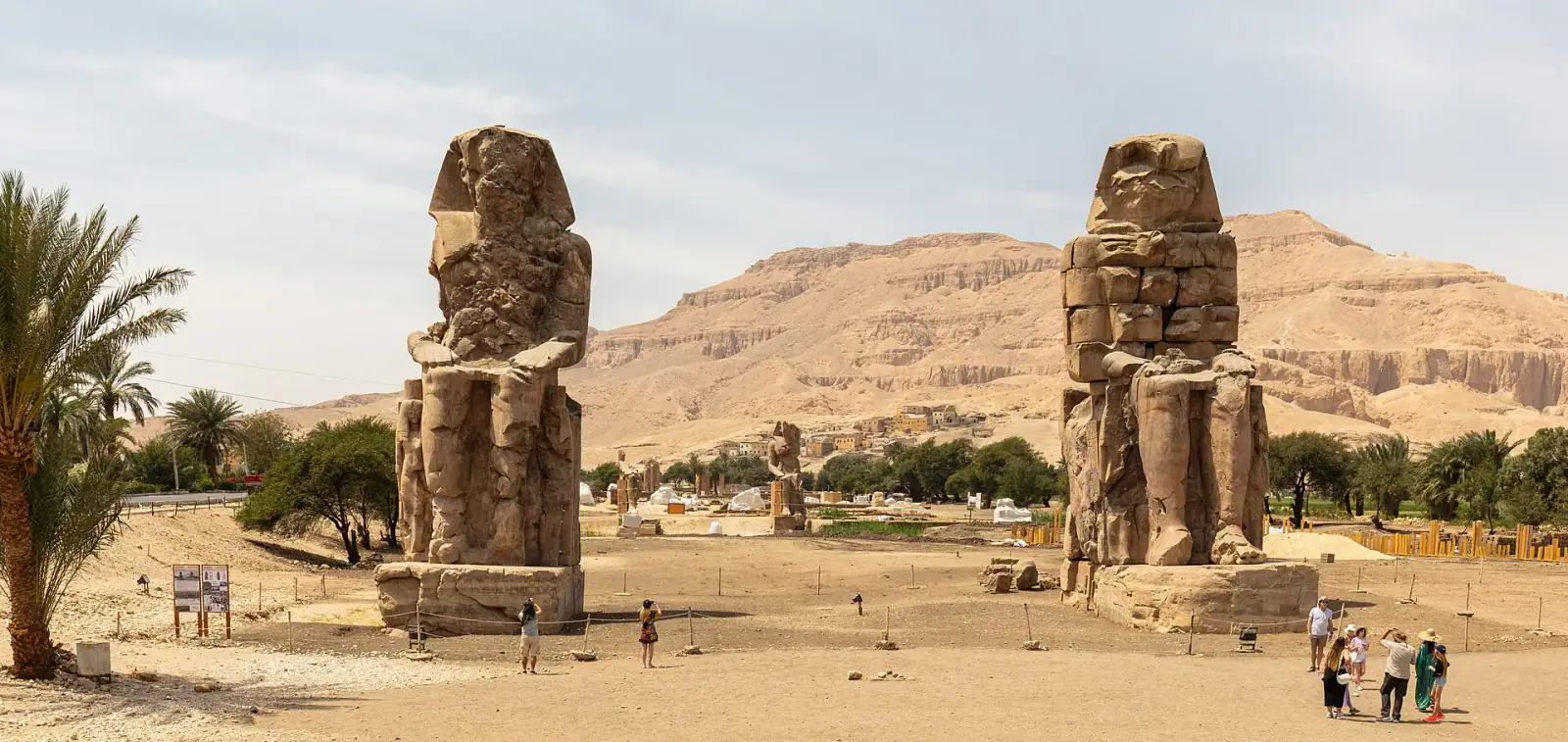
The Colossi of Memnon are two giant seated statues of Amenhotep III on the West Bank at Luxor. For more than three thousand years they have faced east, toward the Nile.
Guardians of a vanished temple
The statues once guarded the entrance to the mortuary temple of Amenhotep III, one of the largest temples built in ancient Thebes. Floods, earthquake damage and later stone quarrying took almost all of it away, leaving the two colossi standing alone in the fields. Archaeologists have since recovered statues and other remains from the site behind them.
How the statues came to be named after Memnon
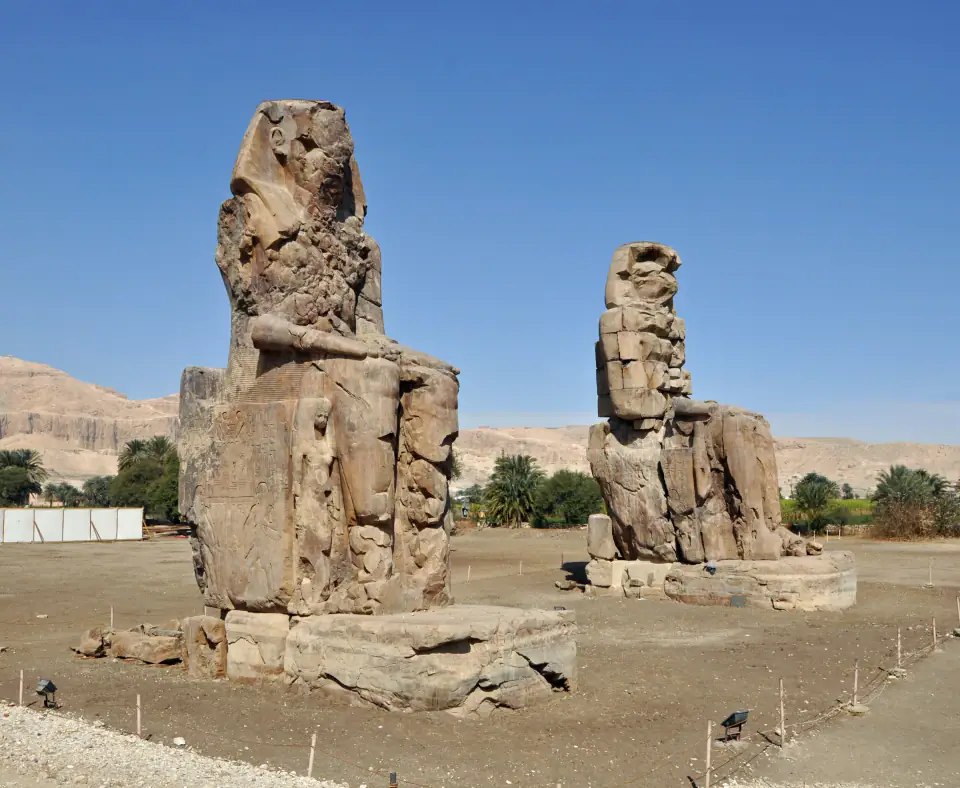
The name comes from the Greeks and Romans, who linked the statues with Memnon, a hero of the Trojan War. After an ancient earthquake damaged the northern colossus, it was said to give out a sound around dawn, and travelers came to hear it. Visitors of the Roman period carved their impressions into the stone, and the inscriptions can still be read on its legs. The sound is said to have stopped after the statue was repaired in Roman times.
The temple is gone, and its two stone guardians have never left their post.
Giants of quartzite
Each statue is carved from quartzite and rises about 18 meters, showing the king seated with his hands on his knees. Smaller figures of his mother Mutemwia and his wife Tiye stand beside his legs.
- Depicts
- Amenhotep III
- Height
- About 18 m
- Material
- Quartzite
- Dynasty
- 18th
Visit on these journeys
Offered as an optional excursion on day 2, as part of the West Bank visit.